Jedburgh Exchange Corner
Written by Local Democracy Reporter, Paul Kelly
An eyesore ‘gap site’ in Jedburgh town centre is finally about to be filled.
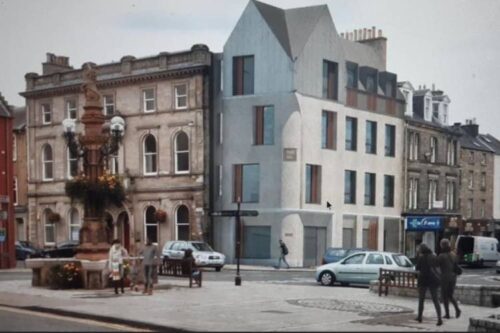
Plans have been approved for an apartment complex and retail unit at 2 High Street, on the corner of High Street and Exchange Street, which was fully dismantled by May 2023.
The derelict 156-year-old property had been wrapped in scaffolding for years due to safety issues and legal wrangles before Scottish Borders Council intervened.
The three-storey and attic C Listed baronial corner tenement was designed by Clarke and Bell of Glasgow and built in 1866.
Now an application has been rubber-stamped SBC to fill the gap site with a modern mixed-use retail and residential block.
Jedburgh Community Council supported the application, which members noted was similar to a bid five years ago.
A spokesperson said: “In general, the public comments welcome progress to resolve the matter of the vacant site and whilst some view were negative in respect of the visual impact of the new building and how it blends in with the historic appearance of the square overall, we would consider the project and therefore the design solution is generally supported.”
In his report approving the application, Euan Calvert, SBC assistant planning officer, says: “The proposals are not over-development or cramming in so much as the proposals respects the scale, form, design, materials and density of surroundings.”
A report with the application stated: “The design concept seeks to promote a contemporary apartment block and retail unit of appropriate scale, design and construction.
“The design aims to add to the richness of the centre of Jedburgh, conforming to the traditional fabric in this area; and continuing the street frontage, whilst providing outstanding housing units responding to the demands of modern living in terms of room layout, high quality materials and sustainable design.
“A key aim of the proposal is to provide a building which enhances the immediate surroundings in Market Square and the High Street and which also provides a strong visual reference point to the long views from the surrounding streets.
“We believe this design will fulfil SBC’s brief ‘to deliver an aspirational and quality scheme that will complement, in contemporary terms, the historic town centre’.”

Scottish Borders Council has received a retrospective planning application for a log processing facility in Selkirk.
Written by Local Democracy Reporter, Paul Kelly
An engineering company has submitted a retrospective planning bid to Scottish Borders Council for a log processing facility built without prior approval in Selkirk.
The tenant-operated small-scale log processing and dry storage facility, including a 1.8m timber boundary fence, access gates, and mobile storage shelters is a immediately adjacent to the Riverside Mill on Level Crossing Road.
The application also requests the erection of a fabrication workshop for the manufacture of steel framed buildings.
The applicant, Emond Engineering, was said to be unaware of the need for planning permission for the work required to establish the log storage premises.
The workshop premises has yet to be constructed.
A report, from RM Architecture, states: ” The proposal represents a highly efficient use of rural-edge land, supporting two independent local business.
“The applicant-operated workshop will provide specialized steel building fabrication, while the tenant-operated log storage facility processes timber into sustainable, low-carbon heating fuel for the domestic market.
“Grouping these complementary commercial uses adjacent to Riverside Mill respectfully continues the area’s historic industrial lineage while creating direct local employment.
“It is noted that several other log and forestry related premises are already established elsewhere within the Riverside Industrial Estate.
“The mixed-use development provides a sustainable, well-designed commercial layout that supports local enterprise, respects the visual character of Riverside Mill, and actively protects neighbour amenity.
“The proposed site is protected by the Selkirk Flood Prevention Scheme and sustains the core land use at Riverside Industrial Estate by creating sites and opportunities for new businesses to flourish.”
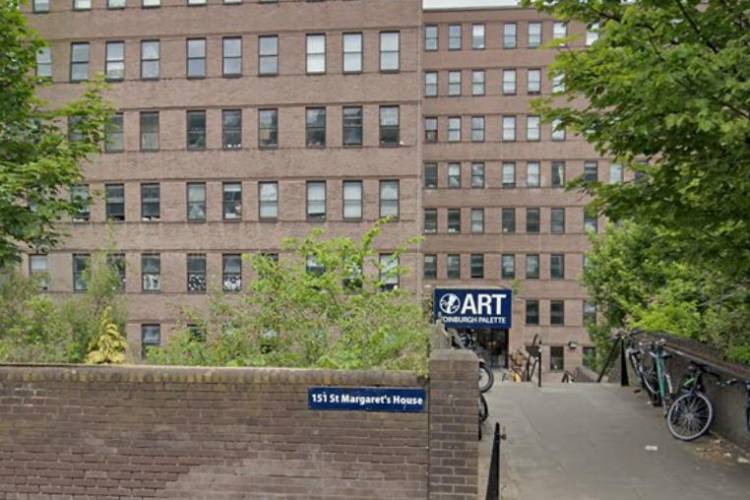
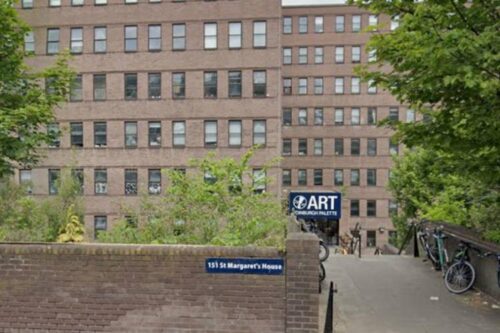
St Margaret's House on London Rd, Edinburgh
Written by Local Democracy Reporter, Nicholas Malizia
Councillors will next week vote on whether to push for an extension to the eviction of over 200 local art studios.
Imperilled tenants at St Margaret’s House received notice in late September that they must leave the hub by January 24, 2027.
The centre in Meadowbank has rented out space to artists for nearly 20 years through charity Scot-ART. Recognisable from its large “ART” signage, the centre was known for providing affordable studio space to artists and charities – including one of Scotland’s only exotic animal shelters.
The Caledonian Trust, who lease the building to Scot-ART, has said the building has been on the market for “some time” and they are in discussions with a “preferred party” for sale.
Multiple councillors are set to raise the issue at Full Council on Thursday, October 29, to support the affected artists and potentially delay their eviction.
Councillor Finlay McFarlane (SNP) has filed a motion to request an extension for tenants’ displacement. He proposed Council Leader Jane Meagher appeal to the Chair of the Caledonian Trust requesting an extension “or at the least for the minimum notice period contained within tenant organisations leases to be respected.”
The City Centre ward councillor will also push for more assistance supporting relocation efforts in addition to finding ways for the city to support “sustainable and equitable” studio space for creatives.
He will call for a review of council assets which could accommodate such a space, according to the motion.
Cllr McFarlane cited fears that a similar fate may await hundreds of small creative enterprises at Summerhall following proposals submitted by Developers. He also referenced “the potential future displacement of tech-startups from within CodeBase at Argyle House”.
A similar motion was put forward by Councillor Jack Caldwell (Lib Dems). He too will urge councillors to engage with Scot-ART and offer support for next steps.
Cllr Caldwell acknowledged the issue is a civic matter between private organisations regarding private land but that it will “affect over 200 tenants, including third-sector organisations who receive City of Edinburgh Council grant funding.”
The plans follow similar closures such as Beaverhall Studios – which housed over 20 artists and faced demolition earlier this year – and WASP Studios Dalry.
MP Chris Murray posted on social media: “It is desperately disappointing that St Margaret’s House will be closing to the hundreds of community organisations and creatives who call the building home.
“Its closure will be felt by communities across Edinburgh and beyond. I am in touch with Scot-ART and the landlord to see what can be done, and ensure that support is provided to all those impacted.”
A spokesperson for Caledonian Trust has said: “We have fully communicated that St Margaret’s House has been on the market for some time. We’re in discussions with a preferred party, but the process isn’t finished and it would be inappropriate to provide any more detail.
“St Margaret’s House has been an important home for independent artists and freelancers in Edinburgh and we have been proud to support them. However, the building is decades old and no longer meets the standards needed for its long-term future.
“Scot-ART has held the lease on the building for many years, on very generous terms, and is now serving notice to its sub-tenants. Vacant possession is targeted for January 2027, with plenty of time for people to plan ahead.”