Tuesday November 3rd 2026
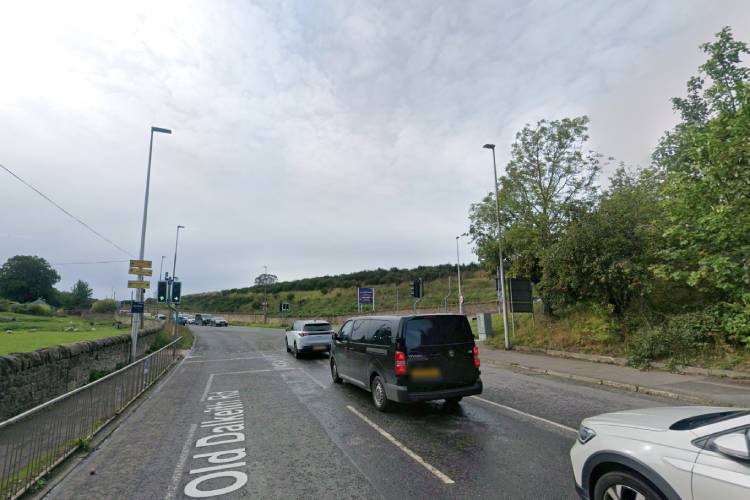
A7 and The Wisp junction
Written by Councillor Stephen Curran, Dalkeith and Danderhall
The ongoing Scottish Power Energy Networks (SPEN) cable-laying works on the A7 have caused considerable frustration for residents, motorists and public transport users across Midlothian and Edinburgh.
While essential infrastructure investment is necessary and some disruption is inevitable, the scale of the delays experienced raises legitimate questions about how these works are managed and whether sufficient safeguards exist to protect the travelling public.
Of particular concern has been the effectiveness of the temporary traffic management arrangements, especially the apparent lack of proactive manual control of traffic signals during busy periods.
The consequences extend well beyond inconvenience to motorists. Lothian Buses services have experienced significant disruption, while people travelling to hospital appointments have also been affected.
Given the proximity of these works to the Royal Infirmary of Edinburgh, ensuring reliable access to
healthcare facilities should be a particular priority.
I have raised concerns directly with SPEN management and Council Officers on several occasions, particularly regarding the need for effective manual control of temporary traffic lights.
On Tuesday, 27 October, I raised the matter publicly at Midlothian Council’s Performance, Review and Scrutiny Committee and directly with our Executive Director for Place.
With no noticeable improvement, I subsequently requested that the matter be escalated at Director level with the City of Edinburgh Council.
The works have now progressed into Edinburgh, where the City of Edinburgh Council has responsibility for coordinating and overseeing roadworks within its area, while SPEN retains responsibility for managing its works appropriately.
I have also expressed serious reservations about any proposal to close The Wisp at its junction with the A7, given the potential to compound the existing disruption.
However, my concerns extend beyond this particular project.
Utility companies such as SPEN have statutory powers to undertake essential works on public roads. These powers serve an important purpose, allowing vital infrastructure to be installed, maintained and upgraded.
Nevertheless, I believe such powers must be accompanied by appropriate responsibilities and
meaningful accountability.
The question is not whether utility companies should be permitted to undertake essential works, but whether the existing legislative framework provides sufficient safeguards to ensure disruption is properly managed and minimised.
In particular, do local authorities have sufficient powers to intervene when traffic management arrangements prove inadequate?
Are those powers being effectively enforced? And should additional protections exist for strategic routes serving hospitals and major public transport networks?
These are questions I believe deserve further consideration.
I have therefore written to Colin Beattie MSP requesting a meeting to explore whether Scotland’s existing roadworks legislation provides local authorities with sufficient powers to prevent excessive disruption, or whether legislative changes may be necessary.
I also believe there is merit in examining the effectiveness of the enforcement powers available to the Scottish Road Works Commissioner. It is important to recognise that responsibility for improving the situation does not rest with one organisation alone. Utility companies, roads authorities and relevant regulatory bodies all have roles to play.
Ultimately, residents should not have to choose between investment in essential infrastructure and a road network that functions reasonably effectively.
We need both.
The immediate priority must be improving the management of the ongoing A7 works. Beyond that, there is a wider opportunity to examine whether Scotland’s roadworks legislation strikes the right balance between the statutory rights of utility companies and the interests of the communities affected.
That is a discussion worth having, and one I intend to pursue.
For balance, Councillor Curran asked Midlothian View to contact SP Energy Networks and Edinburgh Council for comment.
A spokesperson for SP Energy Networks told the Midlothian View:
“Our works along the A7 are part of a £16 million upgrade project to ensure our customers in the south of Edinburgh continue to enjoy a reliable and resilient power supply as electricity demand increases.
“We’re sorry for the disruption and inconvenience caused by these essential works and can reassure those affected that we’re pulling out all the stops and putting extra resources in place to complete this phase of the project as quickly as possible. This includes 24-hour manned traffic management, prioritising emergency service vehicles and extended working hours.
“We fully appreciate the impact on the travelling public and will continue to monitor the situation closely to minimise disruption as much as we can.”
An Edinburgh Council spokesperson added:
“Scottish Power Energy Networks are carrying out essential work between Whitehouse Loan and Shawfair on the A7.
“Efforts have been made to minimise disruption with work starting during October school holidays and having manually controlled traffic lights to ease congestion. The contractors are also working longer shifts to shorten the duration of the works.
“The Ferniehill Road section of the A7 works should be complete by the end of this week.”
Tweet Share on Facebook