Thursday November 5th 2026
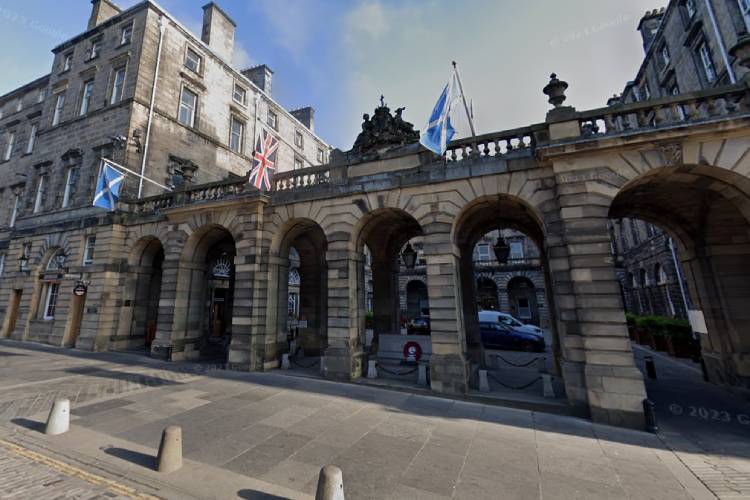
Edinburgh City chambers
Written by Local Democracy Reporter, Nicholas Malizia
The amount of cars on Edinburgh roads has dropped in recent years as plans to reduce car traffic continue to change how capital residents travel.
Edinburgh Council’s ambitious city plans set out objectives for 2030 around active travel, public transport, road safety, and parking. With just four years until the current deadline, councillors have been asked to review key priorities.
The report comes in the wake of the 2024 rollout of the city centre’s Low Emission Zone (LEZ) which imposed a hefty tax on high-emission vehicles.
Traffic has dropped by 17% since 2019, according to the most recent traffic counts, with almost every junction counted showing a decrease. Data came from 117 sites across the city tracked in 2019 and in at least one of 2024 or 2025, according to the City Mobility Plan 2026 Review report.
Transport and Environment Committee convener, Stephen Jenkinson, called it “quite a significant figure”, also noting a 3% increase in cycling.
The council has set a goal of seeing a 30% reduction in car traffic by the end of the decade with officers saying current trends are “in line” with goals.
Convener Jenkinson acknowledged there were “challenges”, calling the plans “ambitious” as Edinburgh is a “growing city” but felt “confident” in the trajectory.
Traffic is down at every single of the ten busiest junctions in Edinburgh as of 2019, said the report. Barnton Junction – the busiest in Edinburgh with 52,416 vehicles as of the 2019 count – reduced to 46,367. This 12% increase was mirrored at other major junctions like Glasgow Road/Maybury Road (9%), Queensferry Road/Clermiston Road North (6%), and St John’s Road/Drum Brae South (6%).
The largest drop was recorded at Tollcross Junction, which saw a 22% drop in vehicles.
The report added: “Notably the LEZ and other city centre restrictions have not resulted in displacement to LEZ boundary roads. Instead, in these areas overall traffic volumes have fallen by 20% and car volumes have fallen by 18%.”
Progress goals were outlined in the report with most being on target. This included targets for increasing EV chargers, reducing transport-related emissions, reducing pedestrian injuries, and expanding dedicated cycle space.
Other areas were marked as “off target” such as reducing the number of people under 18 seriously injured by 60%, a trend which increased slightly from a baseline 17.4 to 20.2 young people in 2026.
Also off-target was increasing the number of residents who walk or wheel at least five days a week. This number decreased to 6%, down from a baseline figure of 9%.
Councillors on the Transport and Environment Committee will review the plans at their meeting on Thursday, November 12. They are asked to approve ongoing and improved traffic data collection.
Tweet Share on FacebookNews