Friday November 6th 2026

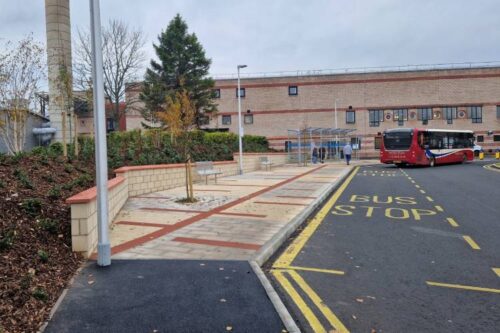
Scottish Borders Council headquarters
Written by Local Democracy Reporter, Paul Kelly
Any proposal for the abolition of Scottish Borders Council must be supported by “compelling evidence”, elected members agreed this week.
If adopted the Scottish Government’s local reform plans would result in the current 32 local councils being replaced by between six and ten regional bodies and 120-160 local authorities.
Additionally, there would be an impact on NHS Borders with the proposed replacement of the current 14 territorial Health Boards with two Strategic Health Boards.
At a meeting of Scottish Borders Council this week, councillors agreed a clear position on public service reform, putting better outcomes for Borders communities at the heart of its approach to future proposals.
The Public Service Reform Position Statement will now be formally communicated to the Scottish Government.
It will also guide the council’s continued involvement in national and regional discussions.
The council has confirmed its support for purposeful reform which improves outcomes, strengthens preventative services and helps create financially sustainable public services.
However, councillors agreed that reform should begin by identifying the problems to be addressed and the outcomes to be achieved. Changes to organisational structures should not be the starting point.
Under the principle of ‘Borders outcomes first’, future proposals will be considered against the difference they would make for people and communities across the Scottish Borders, alongside their impact on local democratic accountability.
The council agreed that any proposal must evidence that it will improve the current outcomes being delivered.
Members were also very clear that any proposal to replace Scottish Borders Council, incorporate it into another organisation or transfer functions away from local democratic control must be supported “by a compelling and evidenced case”.
Without evidence that the proposal would deliver better outcomes for Borders communities, the council does not support such changes.
The council is also calling for the rural nature of the Scottish Borders to be properly considered as proposals develop, including potential impacts on access to services, democratic representation, workforce capacity, local economies, service resilience and investment
Councillor Euan Jardine, SBC Leader, said: “We support reform that improves public services. Our priority is better outcomes for Borders communities, not changes to structures for their own sake.
“Proposals must be backed by clear evidence, address financial and practical implications, and protect local democratic accountability. They must also reflect rural needs, including access to services and how investment, jobs and decision-making are distributed.
“Borders outcomes come first. We will work constructively with the Scottish Government and our partners, keeping our communities’ interests central.”
The council’s position has been developed in response to the Scottish Government’s developing public service reform agenda, which covers a number of areas including local government, health and social care, education and regional working.
It builds on the approach agreed by the Council in September and subsequent engagement with the Scottish Government.
A cross-party member-officer working group was also established to consider emerging proposals and help develop a coordinated Council response.
Tweet Share on Facebook