Monday October 5th 2026
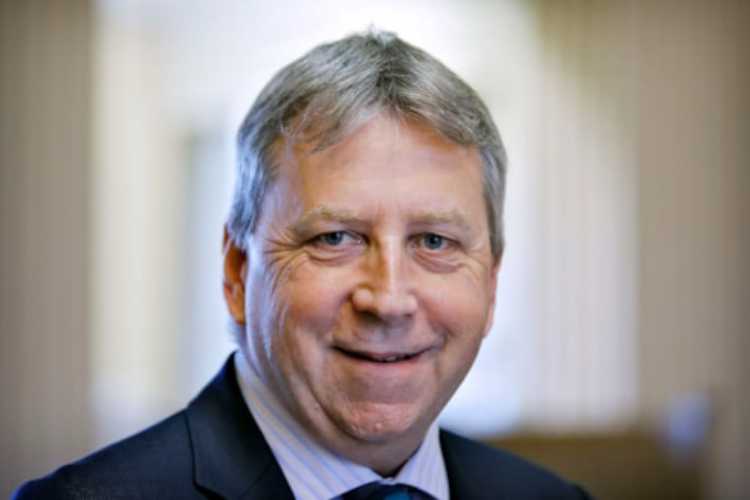
The Principal and Vice-Chancellor of the University of Edinburgh, Professor Sir Peter Mathieson (photo by Paul Dodds)
Written by Midlothian View Reporter, Liam Eunson
The University of Edinburgh’s principal and vice-chancellor Sir Peter Mathieson has announced he will step down from the role in 2028, as the university faces ongoing financial pressures and a major dispute with staff over proposed cuts and job losses.
Sir Peter told a meeting of the University Court, the institution’s governing body, that he had decided earlier this year not to seek a third term as principal.
He is expected to leave the post in early 2028, having led the university for around 10 years after taking up the position in February 2018.
His announcement comes as University of Edinburgh staff are taking part in five weeks of strike action over plans to cut £140 million from the university’s budget and concerns over compulsory redundancies.
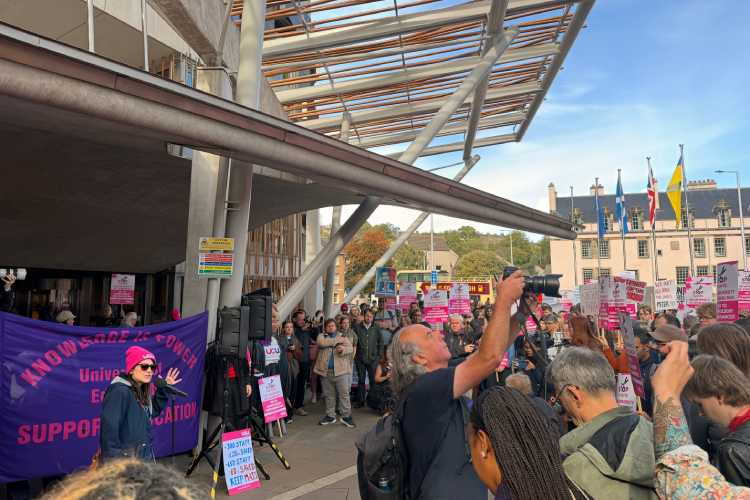
University of Edinburgh staff taking part in UCU strike action over proposed cuts and job losses.
Members of the University and College Union (UCU) began strike action on September 28, with walkouts scheduled to continue until October 30.
The union estimates that around 1,800 jobs could ultimately be lost as part of the restructuring programme, while the university has said it needs to make significant savings to secure its long-term financial sustainability.
The dispute has also intensified following the university’s announcement that 90 programmes are to close to new applicants from the 2027/28 academic year, although existing students will be able to complete their studies.
UCU has criticised the scale of the cuts and called on university management to rule out compulsory redundancies. The union has also argued that the university should make greater use of its reserves and reduce spending in other areas.
The university, meanwhile, has defended its approach, saying rising costs and income pressures mean difficult decisions are necessary to put its finances on a sustainable footing.
Sir Peter has previously said the university’s costs are rising faster than its income and that the savings programme is intended to deliver the recurrent savings required while seeking to avoid compulsory redundancies wherever possible.
In a statement ahead of the current strike action, he said the university remained committed to constructive engagement with trade unions and would continue working to minimise disruption to students.
Against that backdrop, Sir Peter used his speech to University Court to reflect on his time leading the institution and pledge to remain fully engaged in his role until his departure.
He highlighted investment in teaching and student wellbeing, research and innovation, social mobility and fundraising among the achievements during his tenure.
The university has also pointed to its role in securing the UK’s next national supercomputer in Edinburgh and its progress on sustainability, with the institution currently ranked fourth in the world in the QS Sustainability Rankings.
Sir Peter also continued teaching medical students during his time as principal, having begun his tenure by teaching kidney physiology.
Speaking about his decision to leave in 2028, he said: “It has been my immense privilege to lead two of the world’s great universities. Every decision that I have made, and those of the executive teams I have led, have always kept the University’s best interests uppermost.
“We have always acted in good faith, believing we were doing the right things, which are very rarely the easiest things.”
He also acknowledged the wider challenges facing higher education.
“I am keenly aware that higher education is at a pivotal moment,” he said.
“At Edinburgh, we are making the tough decisions necessary to restore our University to financial sustainability and resilience for the years ahead.
“There will be plenty of time for me to thank colleagues and reflect on my time here in due course. For now, I am fully focussed on our task at hand, giving it my full attention until the last day of my tenure in around 16 months’ time.”
Sir Peter joined the University of Edinburgh after serving as president of the University of Hong Kong and previously as dean of the Faculty of Medicine and Dentistry at the University of Bristol.
He was awarded a knighthood in the 2023 New Year Honours for services to higher education.
He has also served as lead on international security for Universities UK and the Russell Group for the past five years.
The university will now begin planning the recruitment of his successor, with the process expected to involve consultation with staff, students and alumni.
The university said the timeframe would allow a new leader to be appointed and support an orderly transition.
Sir Peter’s departure is expected to come as the university continues to deal with the financial and industrial relations challenges that have marked the latter part of his tenure.
Tweet Share on Facebook