Wednesday September 16th 2026
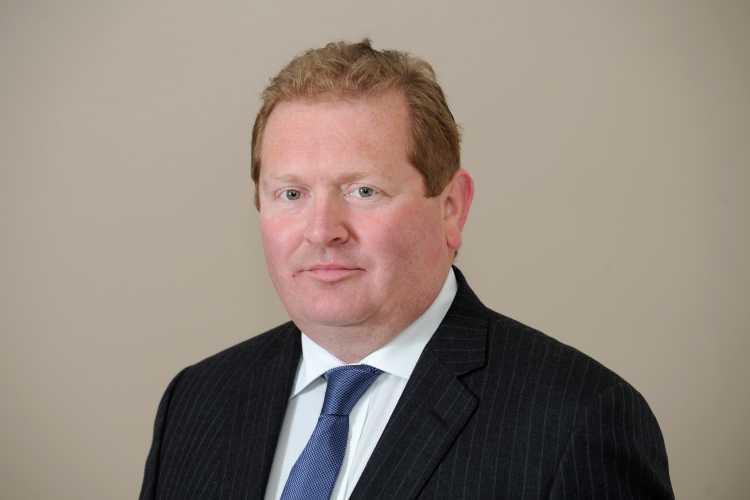
Colin Borland, FSB Scotland Director
Written by Midlothian View Reporter, Liam Eunson
The Federation of Small Businesses (FSB) in Scotland today called for a major streamlining of Scotland’s business rates system to reduce costs and bureaucracy.
Giving evidence to the Scottish Parliament’s Finance and Public Administration Committee, the small business group called for the merging of the country’s 14 separate business rates Assessors into a single, national body. They also highlighted how the current system has created an inconsistent patchwork of rules and reliefs, which are costing the economy time and money.
FSB said it was essential that the Budget as a whole backs the 380,000 small businesses who make up Scotland’s real business base by, for example, giving small firms a fairer crack of the whip when bidding for public contracts. They also repeated their calls to shift enterprise funding support onto services small firms are more likely to use, like Business Gateway.
On business rates, Colin Borland, FSB Scotland Director, told the Committee:
“It’s essential the rates relief system continues to shelter the smallest businesses to support local jobs and economic growth.
“Aspects of the system are ripe for public sector reform. Why do we have 14 different assessors, operating up to eight different sets of practice notes in some sectors? If England and Wales have historically managed with a single body, why can’t we? And why not put it under the auspices of Revenue Scotland to improve accountability?
“The current system also leads to different moving parts operating seemingly independently of each other and a patchwork of reliefs that can overlap and be administered very differently in different parts of the country.”
Explaining the practical difficulties caused by this fragmentation, Mr Borland said:
“By our last count, there were at least 22 different types of non-domestic rates relief available in Scotland, often requiring multiple applications from small firms who can qualify for a range of protections.
“Some are applied automatically, some need to be applied for, some are applied to gross bills, others to the net. We’ve also looked at how they’re applied locally and the picture varies across the 32 local authorities. The application process can vary too.
“We are saving our members thousands of pounds by navigating them through these murky waters – but what we’re seeing must be the tip of the iceberg. And if it takes us the best part of an afternoon to work out what reliefs for a particular firm might qualify, how to apply and then to do the calculation, what hope does a busy small business owner with a thousand pressing demands on their time have? I can’t imagine how much firms are overpaying across the country.”
Speaking after giving his evidence to the Committee, Mr Borland added:
“The best way of sheltering the smallest businesses is to review the thresholds of the Small Business Bonus Scheme, which is described by many of our members as a lifeline. Restoring thresholds to their pre-April 2023 level, then uprating in line with each new revaluation, would ensure the scheme continues to the protect the small firms it was designed to support.”
Tweet Share on Facebook