Tuesday September 22nd 2026
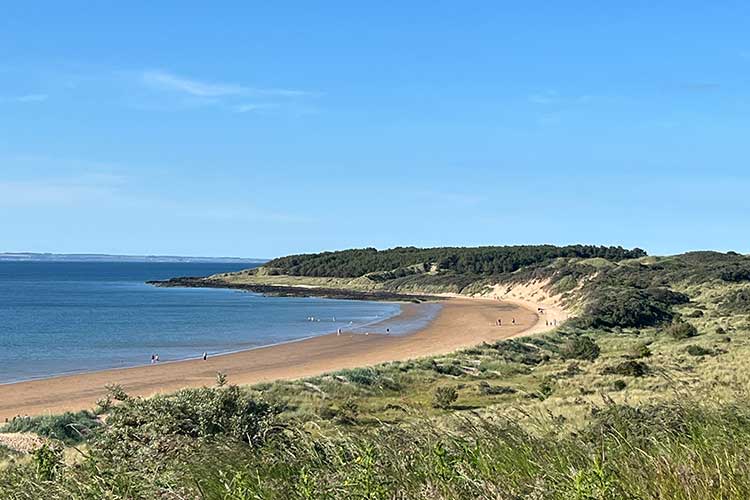
Gullane Beach, East Lothian
Written by Midlothian View Reporter, Liam Eunson
Independent businesses can’t afford for East Lothian Council to simply replicate Edinburgh’s Visitor Levy scheme without first understanding the impact on the area’s own visitor economy, the Federation of Small Businesses (FSB) warned today.
Responding to the council’s consultation on a proposed Visitor Levy, FSB Scotland said a levy could be a “force for good” if it generated genuine additional investment in local infrastructure, transport links and visitor facilities. However, it warned that East Lothian’s draft proposals appear to mirror Edinburgh’s model too closely despite significant differences between the two local economies.
The small business organisation is calling for an independent economic impact assessment to be carried out before any final decision is taken, arguing that East Lothian should learn lessons from the implementation challenges already encountered in Edinburgh rather than repeat them.
Garry Clark, FSB’s East of Scotland Engagement Manager, said:
“East Lothian has a fantastic tourism offer and a Visitor Levy could potentially be a force for good if it delivers genuine investment in the infrastructure and facilities that support visitors and local communities alike.
“But businesses in East Lothian cannot afford a carbon-copy of Edinburgh’s Visitor Levy scheme. East Lothian is not Edinburgh and its tourism economy is different.
“Before introducing a new tax on overnight stays, the council needs to understand what the economic consequences could be for East Lothian specifically, not simply assume that what works in the capital will work here.”
FSB said one of the biggest unanswered questions is how the council arrived at a proposed levy rate of five per cent.
“Businesses want to know why five per cent has been chosen,” said Mr Clark.
“Is that figure based on what revenue the council hopes to raise, or is it based on analysis of what impact it could have on visitor numbers, visitor spending and business competitiveness?
“Those are very different things and, at the moment, local businesses have not seen the evidence.”
The organisation warned that Scotland is already an expensive destination and that accommodation providers are operating with shrinking margins amid rising costs, high VAT, elevated energy bills and additional regulation.
“East Lothian competes with destinations throughout Scotland and beyond,” Mr Clark added.
“There is a genuine risk that some visitors will decide to stay elsewhere, shorten their stays or spend less locally if costs continue to rise. That’s why evidence matters.”
FSB research suggests that local business opinion remains far from settled, but that support could be built if the scheme is designed properly. A survey of businesses in the Lothians found that 32 per cent believe a Visitor Levy could be beneficial, while 49 per cent remain undecided.
Mr Clark added: “East Lothian has the advantage of being able to learn from the experiences of other councils.
“Rather than rushing ahead, it should take the time to undertake an independent economic impact assessment, understand what has worked and what hasn’t elsewhere, and design a scheme that reflects East Lothian’s own visitor economy.
“Getting it right could bring benefits for years to come. Getting it wrong risks damaging the very businesses that make East Lothian such an attractive place to visit.”
The small business organisation also urged the council to consider exempting smaller, non-VAT-registered accommodation providers from collecting the levy, warning some businesses could be pushed towards the VAT threshold simply by administering the tax on behalf of the council. It is also seeking further exemptions for groups such as students, temporary workers and people travelling for medical treatment.
FSB said it remains unconvinced that enough thought has been given to the practical operation of the levy, including whether a percentage charge is preferable to a flat-rate model. There should be strong representation from local businesses on the body that oversees spending decisions, it added, while questioning the balance between the administration costs faced by the council and those being imposed on accommodation providers.
Tweet Share on Facebook