Monday April 27th 2026
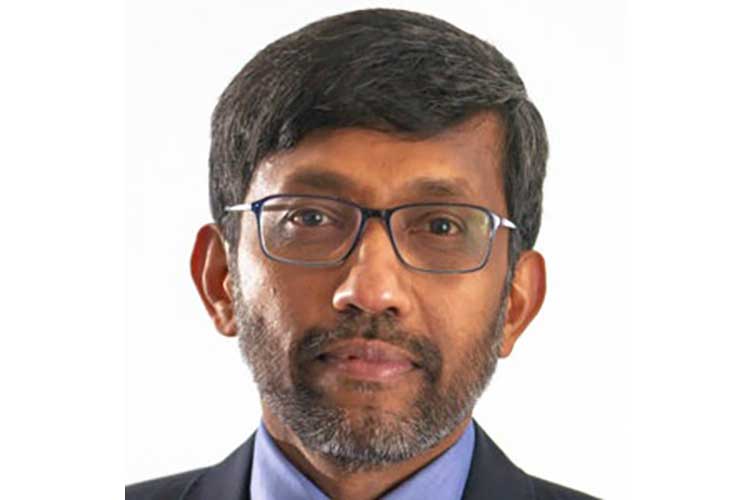
Pal Chidambaram, Reform UK candidate for Scottish Parliament for the Midlothian North Constituency.
This View has been written by Pal Chidambaram, Reform UK candidate for the Midlothian North Constituency in the Scottish Parliamentary elections – 7th May 2026.
The axing of Lothian Bus Route 46 has left communities angry and rightly so. But the anger appears to be directed at the wrong entity. The misconception that Lothian Buses is to blame has been bolstered by the responses of elected representatives to this crisis — responses that include a petition demanding Lothian Buses reverse the cuts, and “engaging” Edinburgh Council, the largest shareholder of Lothian Buses, to influence the decision. These responses are, at best, politically convenient theatre, and at worst, a deliberate distraction from where the real pressure needs to be applied.
The uncomfortable truth is that no government body can direct Lothian Buses to restore a route. That's the law.
Bus services outside London operate under a deregulated model introduced by the Transport Act 1985. Outside London, bus companies run services entirely at their own commercial risk. They determine their own routes, timetables and fares.
Local authorities cannot design or control the network unless they adopt a franchising model — which no authority in Scotland has adopted thus far.
When a route becomes unviable, operators face a binary choice: withdraw it, or cross-subsidise it from stronger routes. But that must be a commercial decision.
In the case of Route 46, Lothian Buses is highly unlikely to cross-subsidise — the company, one of Britain's best-run municipal operators, posted an operating loss in it’s most recent accounts.
But that does not mean there is no solution.
When an operator withdraws a route on commercial grounds, responsibility passes directly to the local authority. Midlothian Council can assess whether Route 46 is socially necessary — it clearly is — and choose to subsidise it, putting it out to tender. Lothian, able to operate by covering only incremental costs rather than full operating costs, would almost certainly win that tender and have the route restored within weeks.
The numbers are not frightening. Based on Transport Scotland’s 2024-25 cost indicators, running Route 46 five times a day in each direction would probably cost the council in the region of £100,000 per year in subsidy. That is a rounding error in any serious public budget.
Unless, of course, the budget has already been committed elsewhere.
Which brings us to the SNP’s flagship free bus travel scheme for under-22s — introduced under the SNP-Green administration, and now costing around £200 million annually. Edinburgh and Midlothian alone account for £26.5 million of that spend. While some of those free journeys may be genuinely transformative, a fair number is understood to be entirely discretionary — made because the ticket costs nothing, not because the journey is necessary.
The subsidy for route 46, and other such routes, could be funded many times over from a modest tightening of that single scheme. But that would require politicians to make trade-offs rather than gestures, and to prioritise working communities over headline-friendly freebies.
Petitions and engagements are unlikely to work. What would restore the service is a council willing to act, a government willing to fund essential services before discretionary ones, and elected representatives who level with their constituents instead of performing concern for them.
The community deserves representatives with a problem-solving mindset — ones who spend public money on what people actually need. The election on 7th May is one opportunity to find them.