Wednesday September 30th 2026

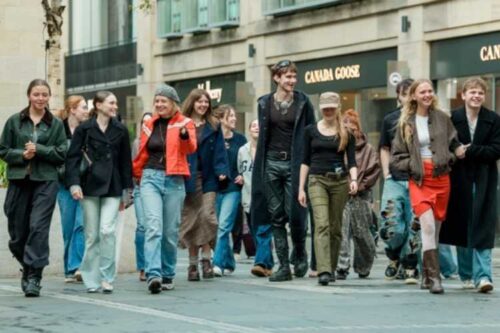
Glasgow City Centre
Written by Midlothian View Reporter, Liam Eunson
The Scottish economy continued to show resilience in the second quarter of 2026, according to the Fraser of Allander Institute at the University of Strathclyde.
In the latest quarterly Economic Commentary, the Institute largely left forecasts unchanged, reflecting that this resilience is challenged by the continued uncertainty in global markets.
Inflation has ticked up slightly in recent months, driven largely by rising housing, energy and transport costs. The labour market also continues to show signs of softening, with payrolled employment falling consistently since 2023, and job losses concentrated among younger workers and in the retail and hospitality sectors.
Conditions remain difficult for many households. The social security system continues to provide important income support, but the increases in some disability benefits have been lower than previously forecast.
Emma Congreve, Deputy Director of the Fraser of Allander Institute, said: “Scotland’s economy has held up well in the face of continued global uncertainty, but beneath the headline figures there are signs of a labour market under strain, with payrolled employment falling steadily since 2023 and young people bearing much of that impact.
“Against this backdrop, the Scottish Government has set out a five-year Programme for Government, with some big ambitions on public service reform as well as some eye-catching policies.
“The Scottish Budget, due to be announced on 3 December, will be a demanding test of how the Government’s ambitions measure up against the fiscal reality, and where spending will ultimately be prioritised, and in some areas, cut.”
Tweet Share on FacebookNews